
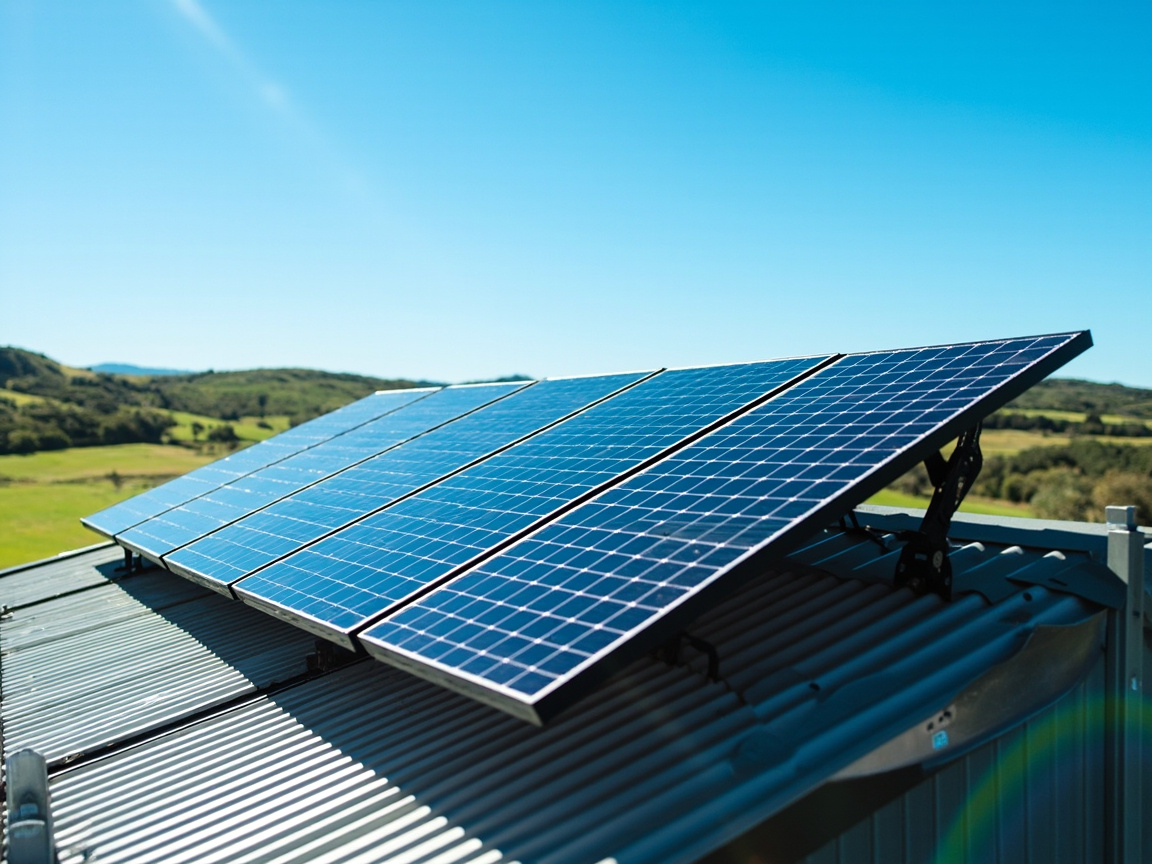
Solar can be a sound option for many New Zealand farms, especially where substantial electricity is used during daylight hours. It is not an automatic fit. System size should follow measured energy demand, the farm's ICP arrangement, a suitable installation site, network conditions, resilience goals and budget.
In most cases, the strongest case for solar comes from using the electricity on farm as it is generated. Exported electricity may have value, but limits and payment arrangements vary. A battery can shift energy into other parts of the day or support selected loads during an outage, but it adds cost and should have a defined job.
Start with when the farm uses power
Farm solar is a question of timing as much as total consumption. Both the EECA farm solar checklist and DairyNZ's on-farm guidance put the actual demand profile at the centre of planning.
Possible daytime loads include pumps, irrigation, cooling, refrigeration, ventilation fans, lighting, processing equipment and dairy-shed equipment. Not every farm has these loads, and operating times can change through the season. The useful question is how much power is normally being used while the array is generating.
Interval or half-hourly data can show the daytime base load, short peaks, overnight demand and seasonal changes. This gives a designer a better basis for estimating how much generation the farm could use directly. An annual bill alone cannot show that relationship.
It also helps to separate essential loads from flexible ones. An essential process may need to run at a fixed time. A flexible process may be able to move into daylight hours, provided crop, animal and operating requirements allow it. That needs to be tested with the people running the farm, not assumed in a spreadsheet.
Map the ICPs and the installation site
Some farms have one Individual Connection Point, or ICP. Others have several, supplying different sheds, pumps, stores or circuits. A solar system connects into a particular part of that electrical arrangement, so each relevant ICP should be mapped to the loads and switchboards it serves.
The physical site matters just as much. A roof needs suitable condition, structure and access. Shade, wind exposure, distance to the switchboard and the route for cabling can all affect the design. Ground mounting can be considered where roof space is unsuitable, but vehicle movement, stock, access, exposure and cable routes still need attention.
Seasonal demand deserves its own review. A yearly total can hide a short period of heavy pumping, cooling or processing. Planned electrification can change the future profile too. Share realistic plans for new pumps, refrigeration, processing or vehicles before sizing, without treating every possible project as certain.
Give the battery a specific job
A battery may make sense where useful demand continues outside daylight hours, or where selected equipment needs stronger outage resilience. It should be sized around that purpose. Supporting lighting, internet and controls is a different task from supporting a large pump, cool store or processing load.
Solar panels on their own do not normally keep a grid-connected site operating during an outage. Backup operation must be designed so the system isolates safely and supplies the nominated circuits. A proposal should state which loads are included, how long support is intended to last, and what happens when the battery reaches its operating limit.
Check connection, metering and export arrangements
The Electricity Authority describes on-site solar as distributed generation connected to a local network. The proposed system may require review or approval from the relevant lines company before installation.
Confirm metering and export requirements with the electricity retailer, metering provider and lines company. Export limits may apply and payment arrangements should be checked rather than estimated. This does not make export irrelevant. It means the investment case should show on-site use separately from cautious export assumptions.
Pre-design checklist for farm solar panels in NZ
- Obtain recent interval or half-hourly electricity data for every relevant ICP.
- List major loads, operating times, seasonal patterns, and which loads are essential or flexible.
- Map each ICP to its buildings, equipment and switchboards.
- Inspect viable roof and ground locations for condition, shade, wind, access and cable routes.
- Identify the exact loads that matter during an outage.
- Record realistic future electrical loads and timing.
- Confirm likely connection, metering and export requirements with the relevant parties.
- Compare several complete quotes based on the same data and operating goals.
Compare complete designs, not panel capacity
A useful proposal explains the data used for sizing, the expected match between generation and daytime demand, the connection point, and the assumptions made about export. If a battery is included, the proposal should explain what it is intended to do and which loads it will support.
It should also identify the roof, ground, switchboard, cable, consent, network and metering work that is included or excluded. Monitoring and operating responsibilities need to be visible too. This makes quotes easier to compare and reduces the chance of choosing a system on headline capacity alone.
The first useful outcome is a measured brief
The opening step is not to maximise the panel count. It is to understand which loads can use solar generation, where the system can connect, what resilience is required, and which site and network constraints must be respected.
Farm owners and operations teams can review EPE Greenery's practical green energy work and discuss an initial assessment. Any recommendation should start with the farm's data and operating conditions before deciding whether solar, storage or a particular system size is suitable.